 Skip to content
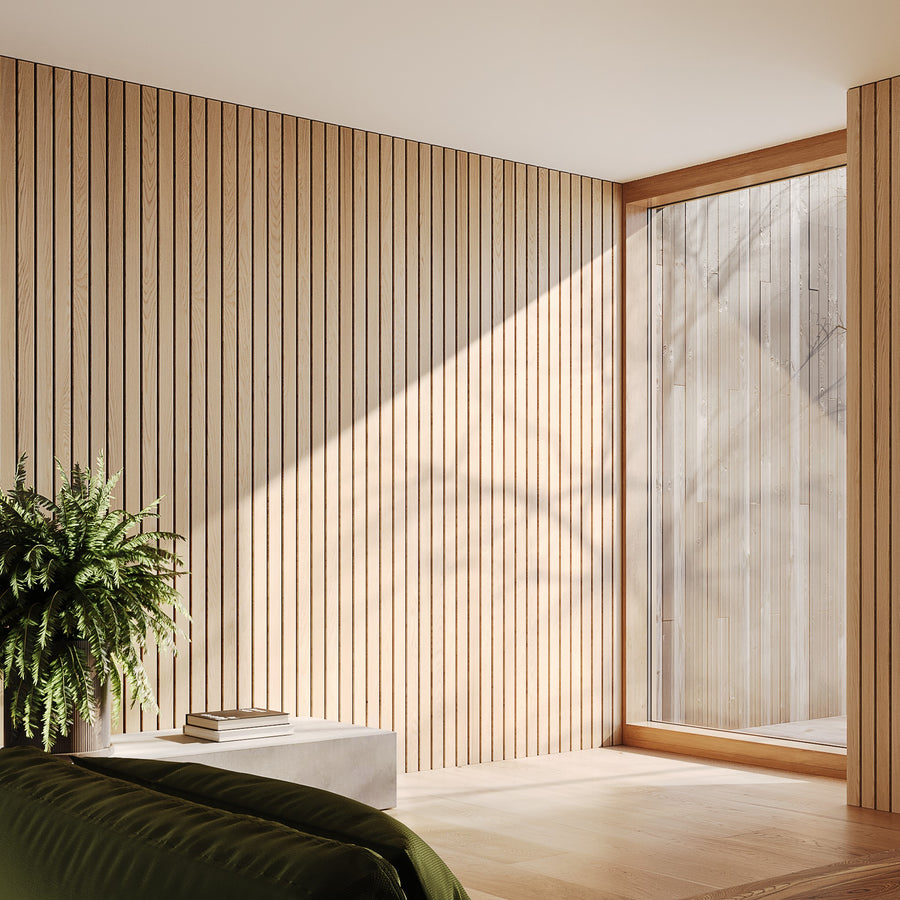
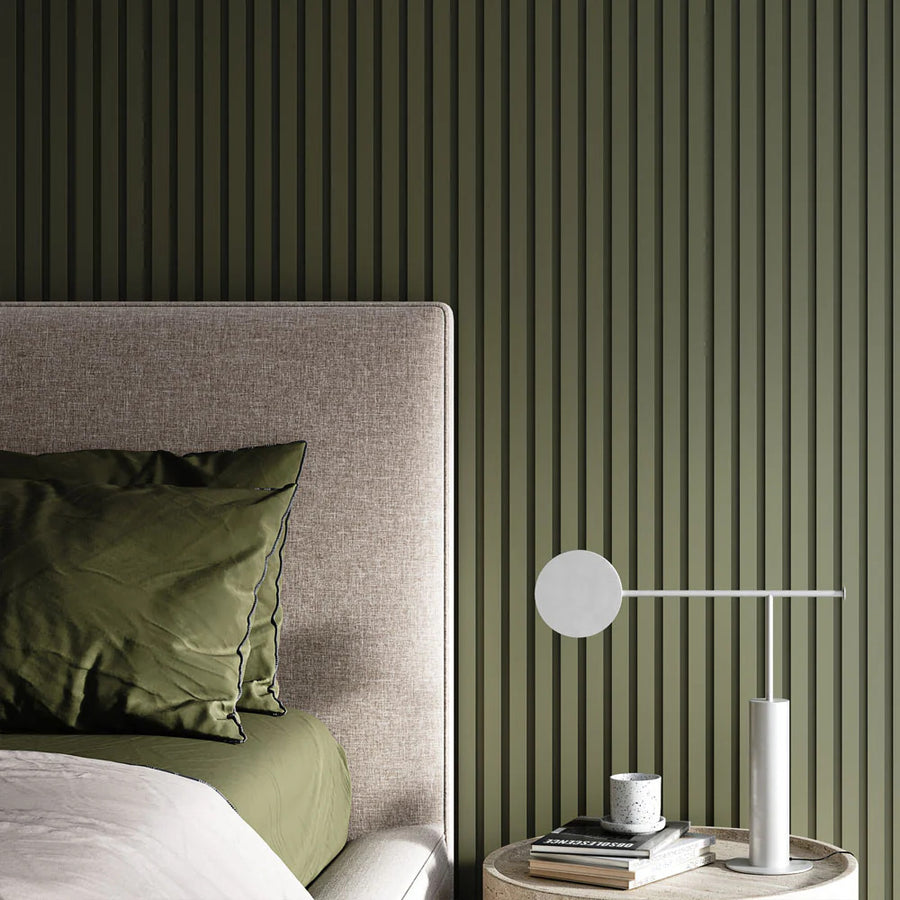
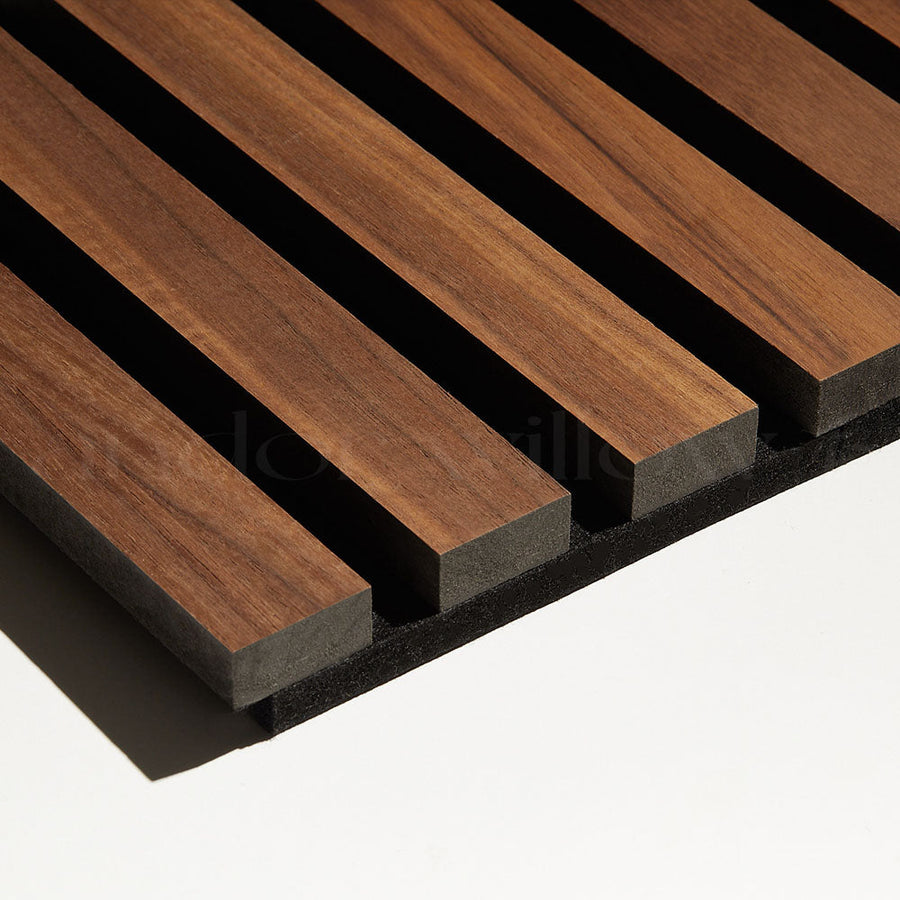

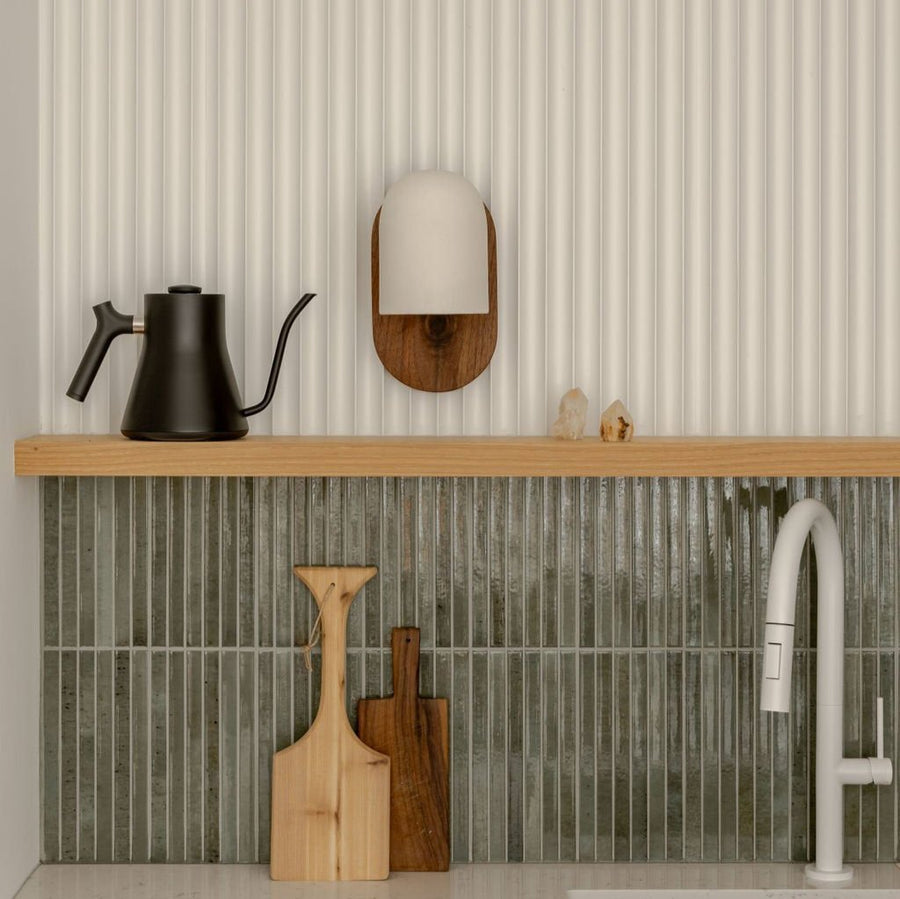






7 Smart Ways to Use Wood Slat Room Dividers in Modern Homes

Ever wish you could give your living room a little privacy, create a proper home office, or make your bedroom feel more tucked away without losing the space you love? It's a common challenge, especially when several areas share the same open layout.
That's where wood slat room dividers come in.
Their clean lines can give different parts of your home a clear purpose while letting light pass through, so your rooms still feel open and inviting.
Wood slat room dividers can help you create a home office, add privacy to your bedroom, or give your dining area a little more character. Here are seven smart ideas to help you make the most of your space!
Key Takeaways
- Wood slat room dividers can help organise open-plan spaces without making them feel closed in.
- They work well in living rooms, bedrooms, dining areas, entryways, and home offices.
- Slat spacing, height, finish, and placement can completely change the look of a divider.
- Wall panels can be paired with dividers to create a more coordinated interior.
- A well-placed divider can give an unused or awkward area a clearer purpose.
1. Add Privacy Around a Bedroom
Studio apartments and open-plan bedrooms can sometimes use a little separation.
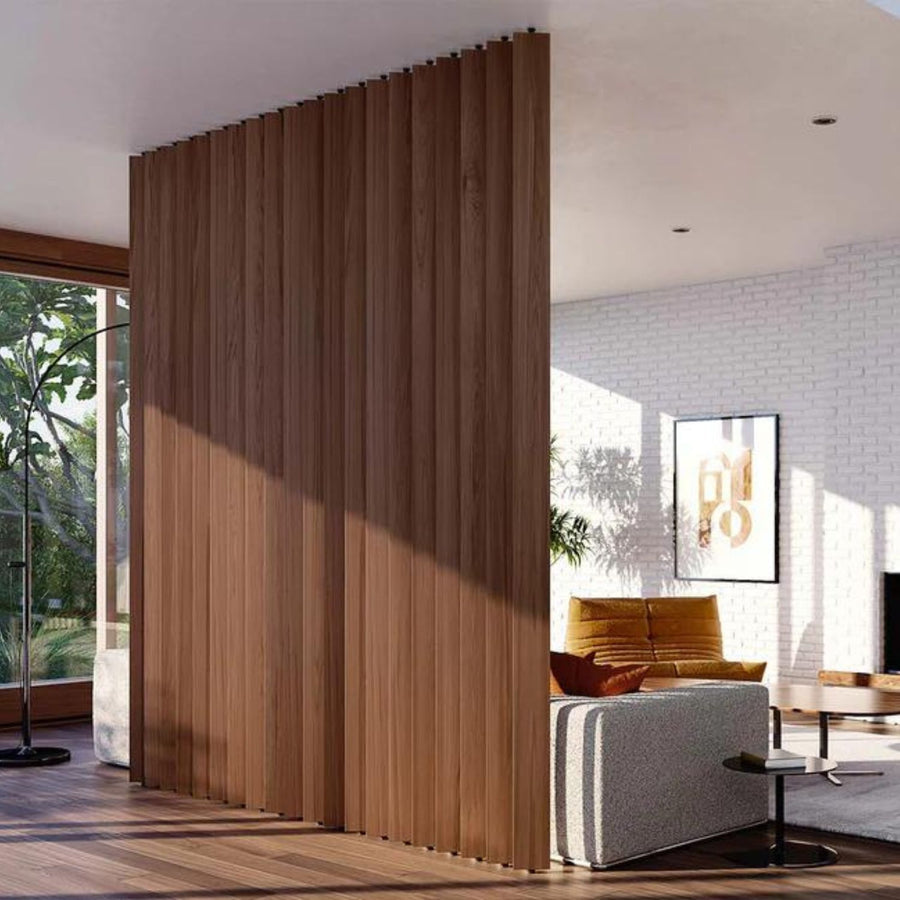
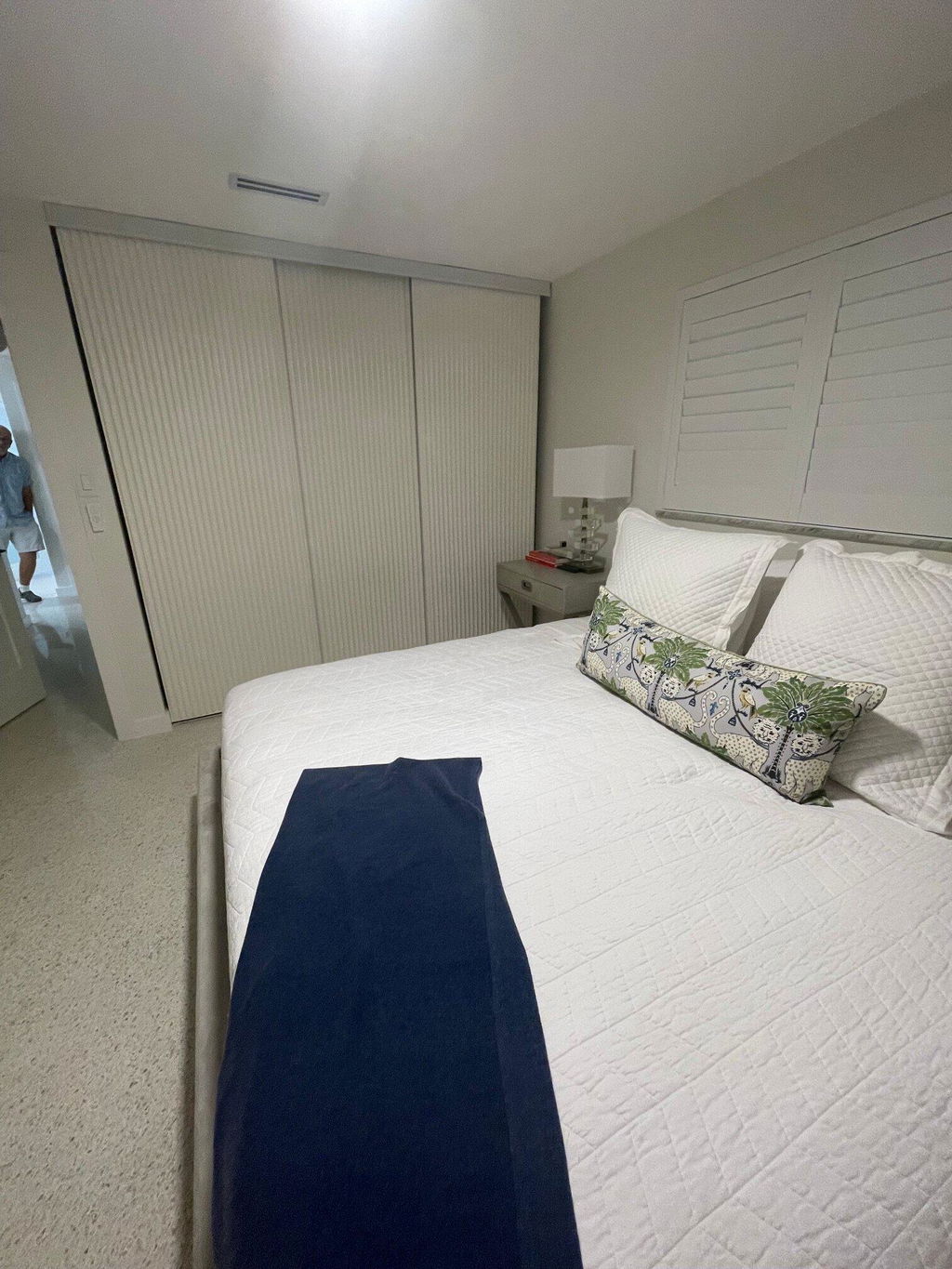
A wood slat room divider works particularly well beside a bed or at the foot of a sleeping area. You get a clear boundary around the bedroom while still allowing light to move through the space.
If you want something different, though, you can try out a different kind of divider.
In this case, that good 'ole classic critall glass divider...

You can also add a small bedside table, floor lamp, or plant beside the divider to make the sleeping area feel more established. A simple change like this can make a shared room feel much more organized...
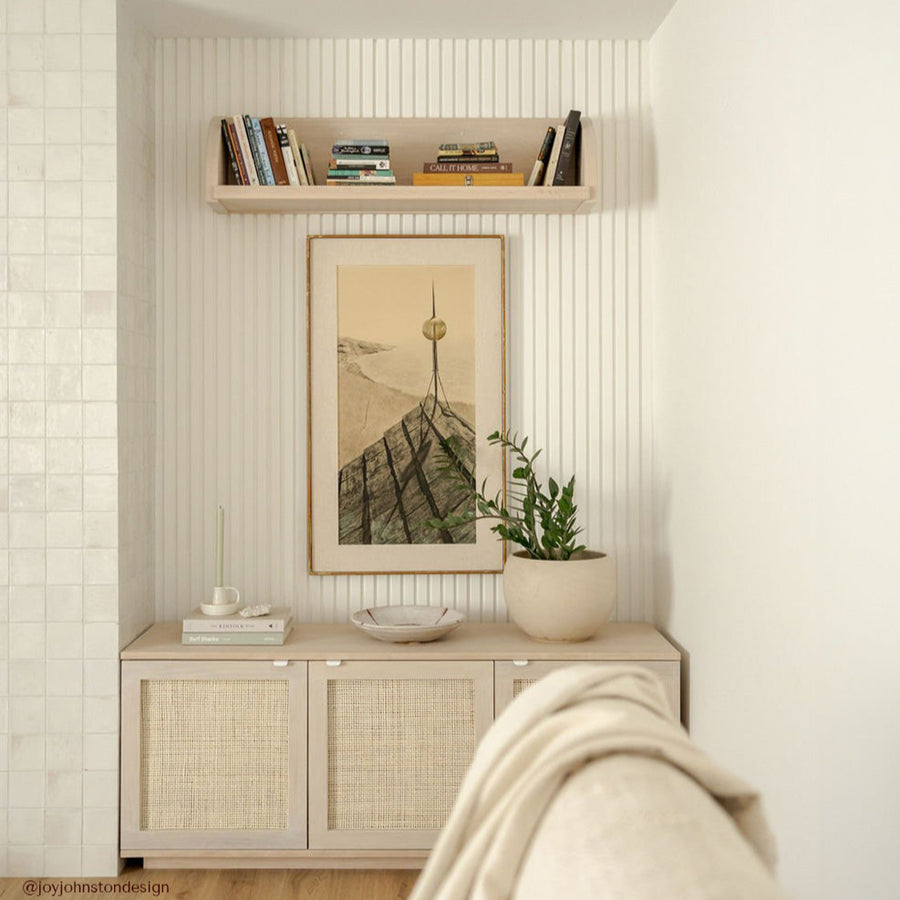
If the bedroom needs another visual element, a section of fluted panels behind the bed can work nicely with the vertical lines of the divider. The two details can complement each other without competing for attention.
2. Separate Your Living Room and Dining Area


Living and dining areas often share the same open space, especially in modern homes. A wood slat room divider can give each area its own identity while keeping the layout visually connected.
Try positioning the divider near the back of the sofa or along the edge of the dining area. The vertical slats create a natural boundary, while the gaps allow you to see through to the other side.
You can make the area feel even more intentional with a console table, a few plants, or some soft lighting nearby. If you already have timber furniture, choose a divider finish that works well with those existing pieces.
For a little more detail on the surrounding walls, wood slat panels can echo the lines of the divider without making the whole room feel overly matched.
3. Create a Home Office in an Open Space
Working from the dining table can get old pretty quickly!
If your home doesn't have a dedicated office, a wood slat room divider can help carve out a workspace from a larger room. Place it beside your desk or behind your chair to create a visual boundary around your work area.

Give your workspace some breathing room
Keep the area around your desk fairly simple. Good lighting, comfortable seating, useful storage, and a little greenery can be enough to make the space feel complete.
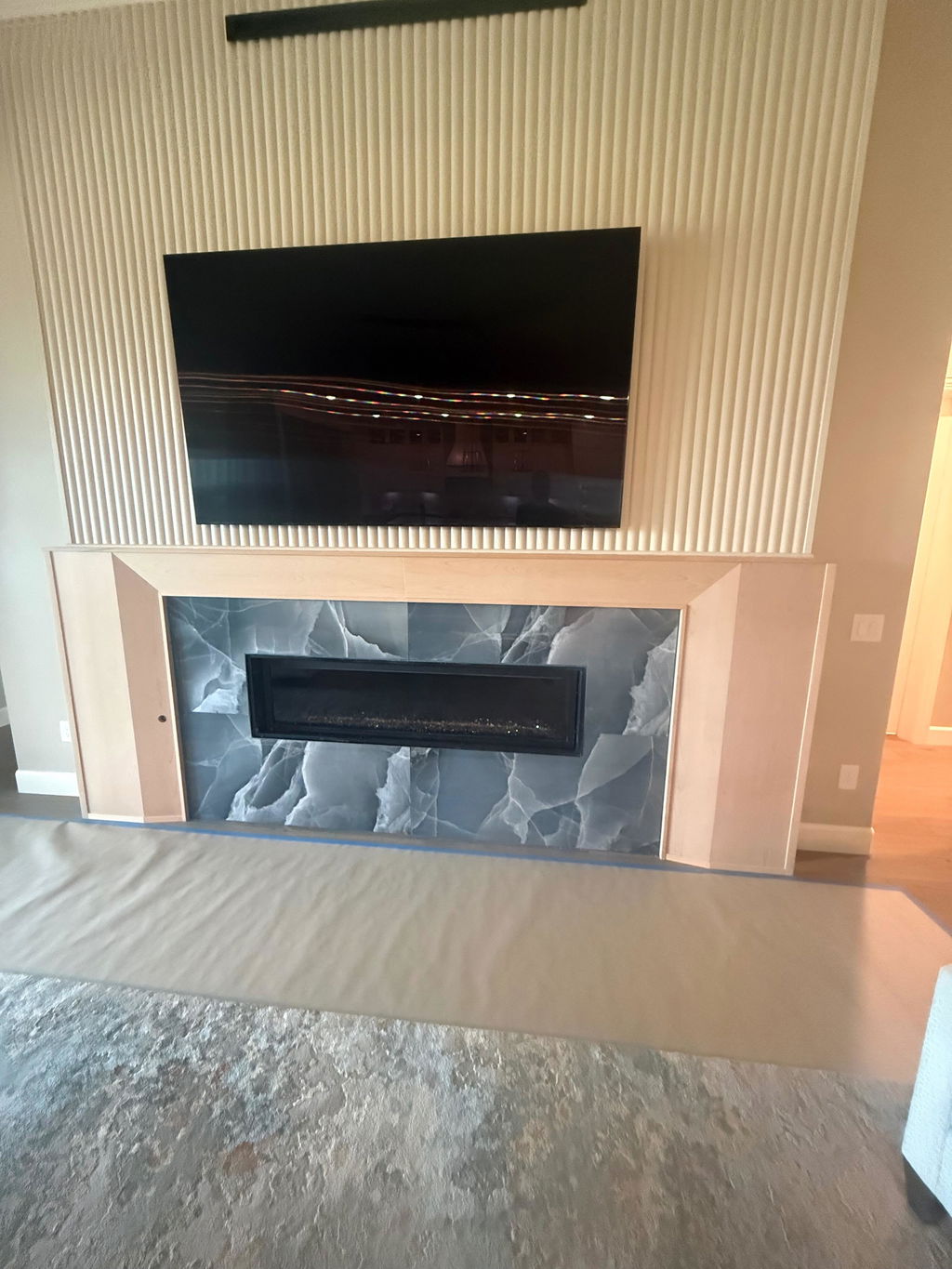
For the wall behind the desk, you could bring in a different panel style for some contrast. Fluted panels can add a more detailed backdrop, especially when paired with a simple desk and clean furniture.
You could also use wood slat panels if you want the wall and divider to share a similar look. It gives you plenty of flexibility when putting the workspace together.
4. Give Your Entryway Its Own Space
When the front door opens straight into your living room, the entryway can easily get lost.

A wood slat room divider can give the entrance a little more definition. Position it beside a console table, bench, mirror, or shoe cabinet to create a clear transition between the doorway and the rest of the room.
This is especially useful in homes with limited floor space. You can create the feeling of a dedicated entry area without adding another full wall.
For the nearby wall, tongue and groove panels can add another layer of detail while keeping the entryway relatively simple. They can work particularly well with a bench, timber console, or other natural finishes.
5. Use a Divider As a Decorative Backdrop
Room dividers don't always have to separate two functional areas. Sometimes, they can simply give furniture a stronger backdrop.

Place a wood slat room divider behind a sofa, lounge chair, dining table, or console. The vertical lines can frame the furniture and add another layer of detail to the room.
Layer it with different materials
This is where you can get a little creative!
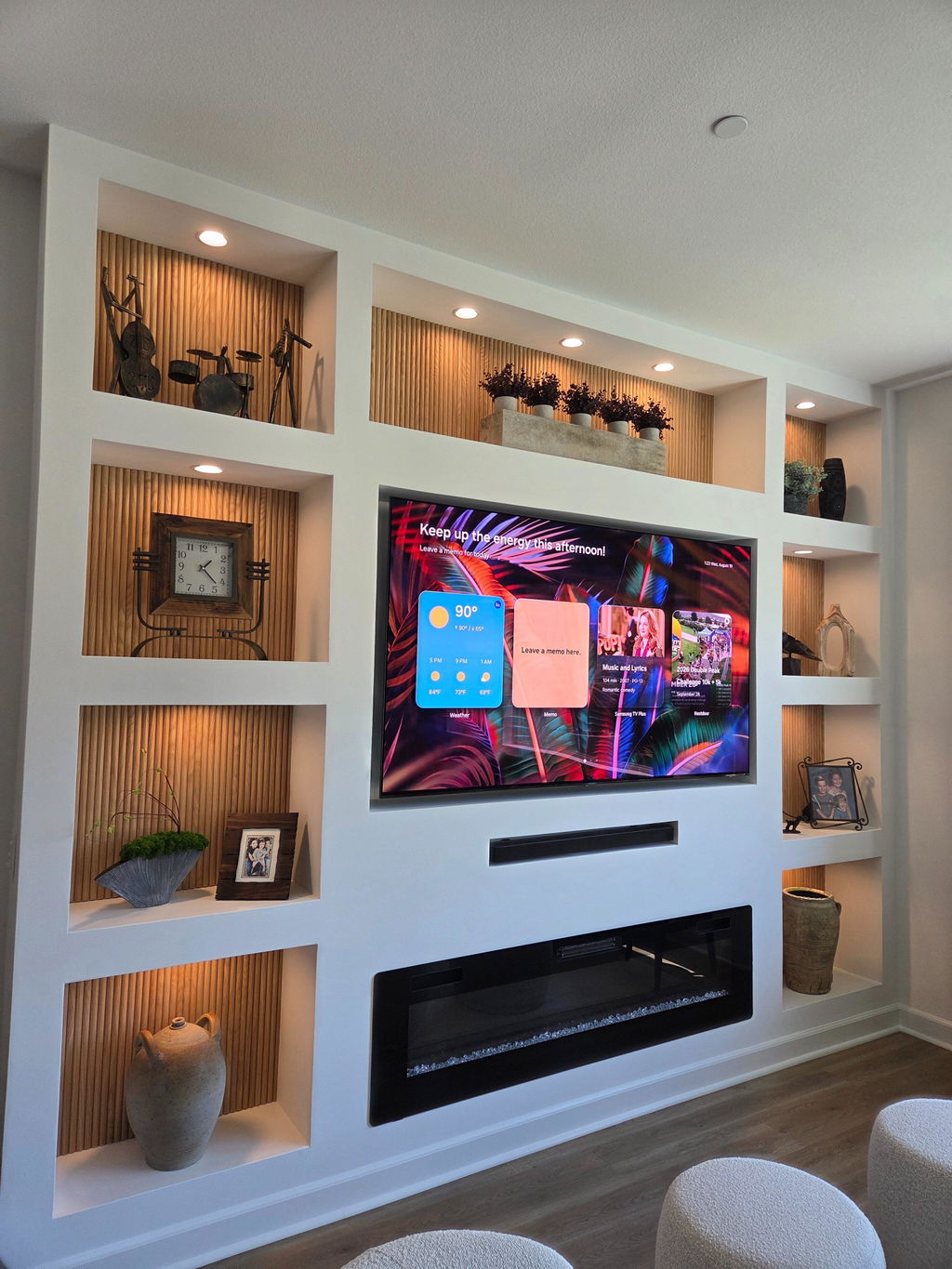
Try combining the slats with plants, upholstered furniture, stone surfaces, woven materials, or a nearby fluted panel. The combination can create an interesting focal point without requiring a lot of decoration.
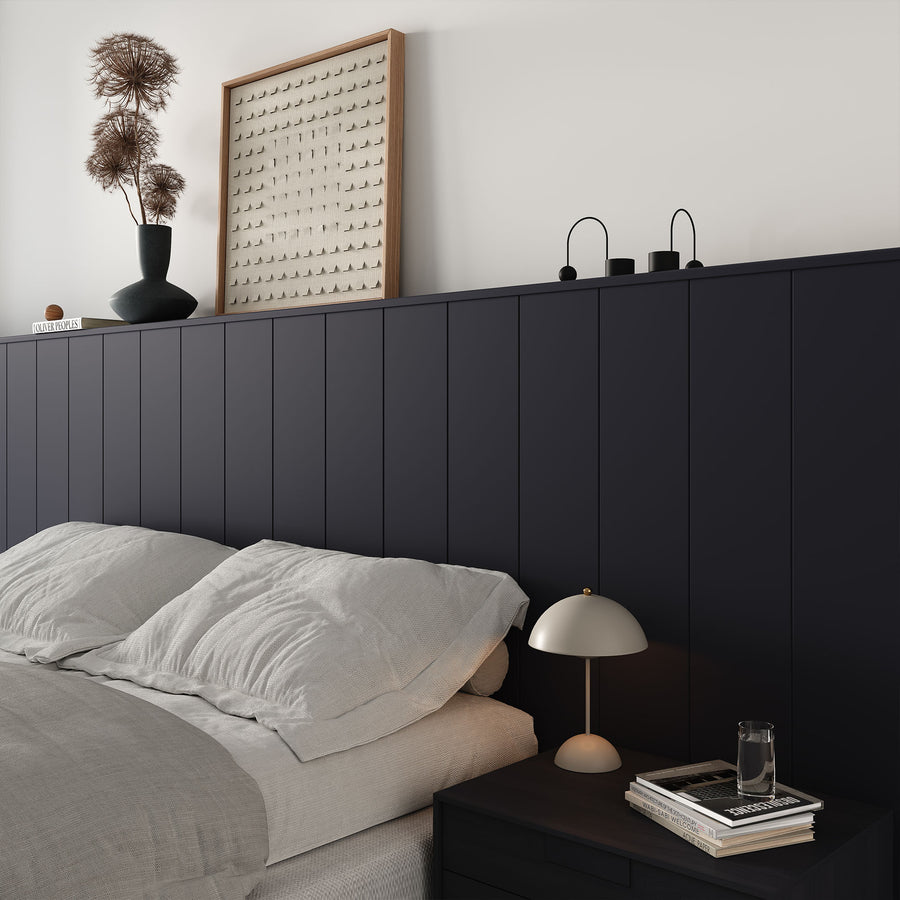
Paintable panels can also be useful when you want the wall treatment to work with a specific colour scheme. Once painted, they can blend with the room's palette or create a subtle feature around the divider.
You don't have to use the same panel style everywhere. Sometimes mixing two complementary profiles gives the space a more considered look.
6. Create a Kitchen and Dining Boundary
Kitchens and dining areas often share one large open space. A divider can help make the dining area feel more defined while keeping it easy to access from the kitchen.

Place the wood slat room divider beside the dining table or along the edge of the kitchen. It can frame the dining area and give the room a little more structure.
There are practical uses for this approach, too. A divider can partially screen a utility area, pantry entrance, or storage zone that you'd rather keep out of direct view.
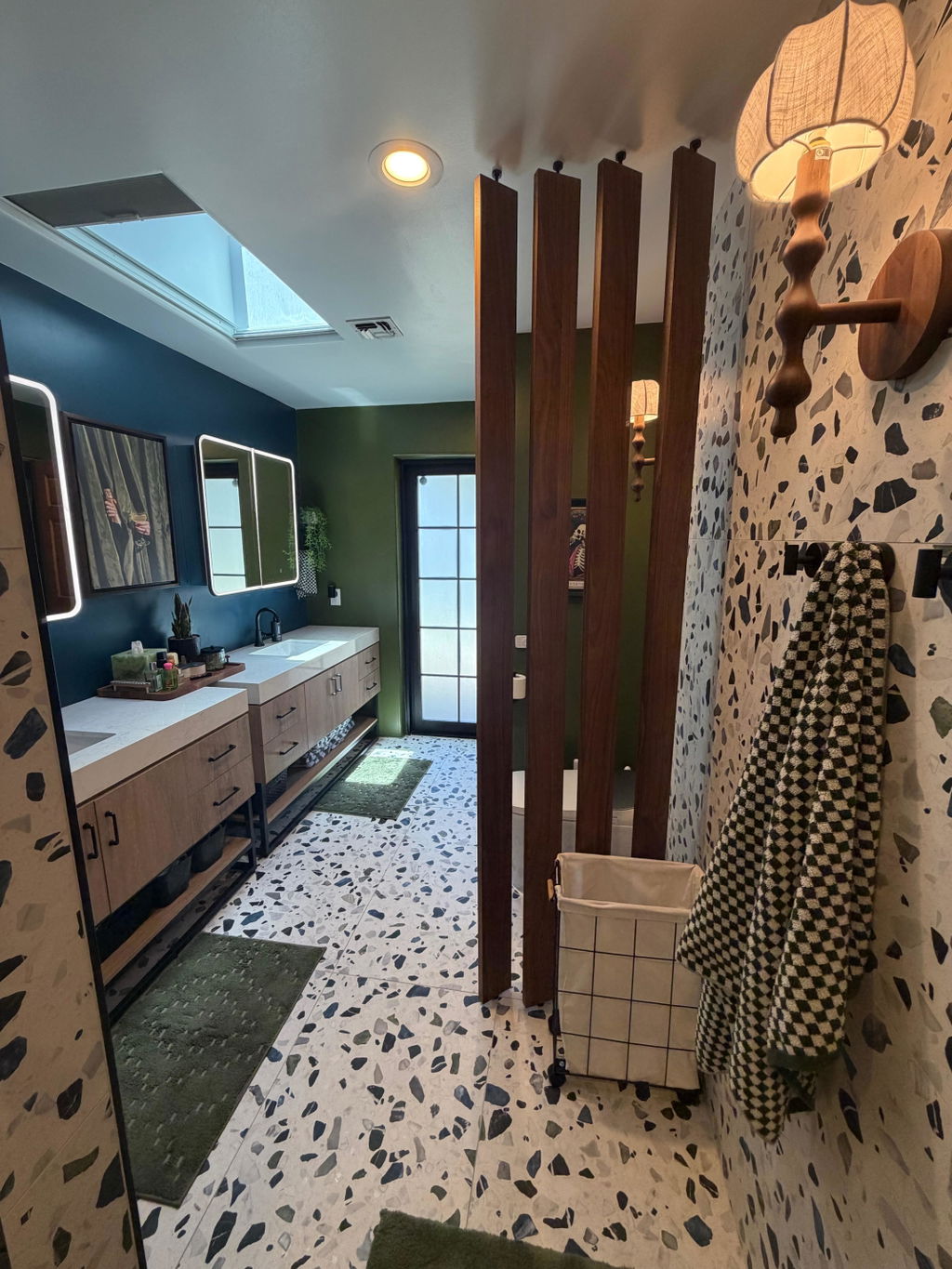
If the kitchen or dining wall feels a little plain, a simple run of wood slat panels can continue the same vertical detail. And yes, even the laundry basket deserves a little privacy sometimes!
7. Divide A Multipurpose Room
One room can have several jobs. A guest bedroom might also be your home office, reading space, hobby room, or workout area.
A wood slat room divider can help organise those different functions. You could use one to separate a desk from a sleeping area or create a small reading corner without completely dividing the room.
Before deciding where to install it, think about how you actually move through the space. Consider where furniture needs to go, which areas you use most, and where natural light comes from.
For the surrounding walls, paintable panels can be a handy option when you want to introduce a specific colour into the room. You can coordinate the finish with your furniture, cabinetry, or even the colour of the divider.
The goal is to make the room easier to use every day.
Choosing The Right Wood Slat Room Divider
Once you've decided where the divider will go, there are a few design details worth considering.
Slat spacing has a major effect on the finished look. Wider gaps create more visibility between areas, while closer spacing creates a stronger visual boundary.
Height matters too. A floor-to-ceiling divider can become a major architectural feature, while a shorter design can define a zone without dominating the room.
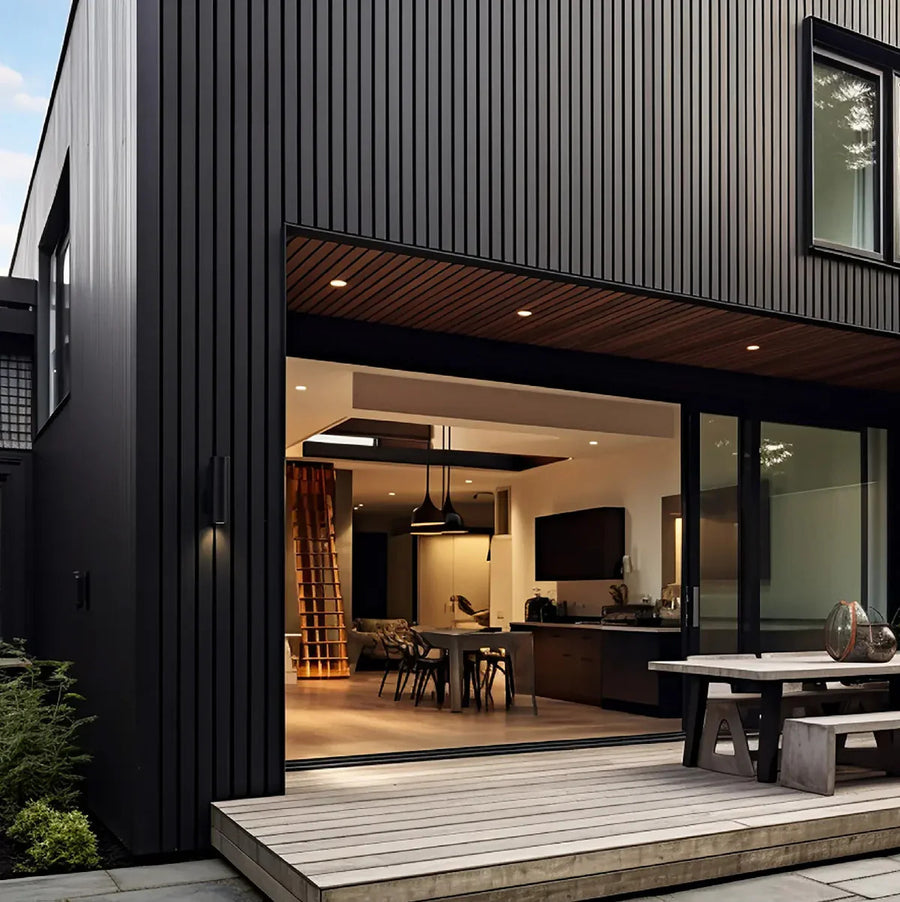
Then there's the finish. Natural wood tones can work beautifully with neutral interiors, timber furniture, plants, and warm lighting. Darker finishes can create a stronger look alongside contemporary furniture and deeper accent colours.
Think about the whole room before choosing one finish. The divider should feel like part of the space rather than something added at the last minute.
How to Match a Divider With Your Existing Interior
Start with what's already in the room.
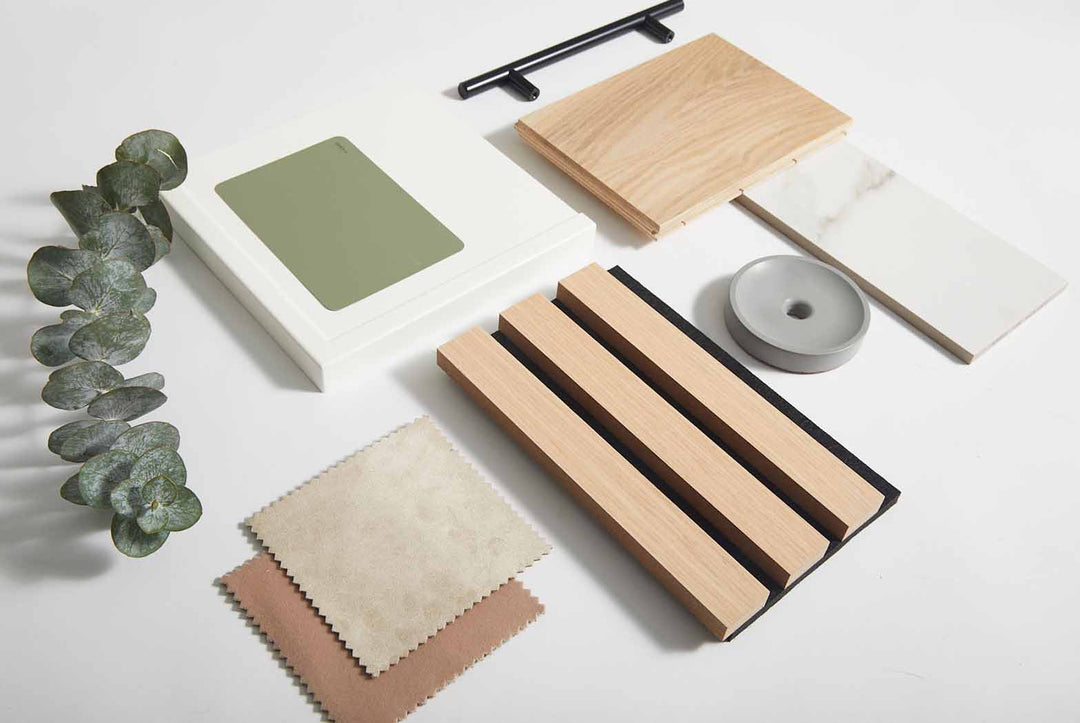
Look at your flooring, furniture, cabinetry, doors, lighting, and existing wall treatments. These elements can give you a good starting point for choosing the colour and finish of your wood slat room divider.
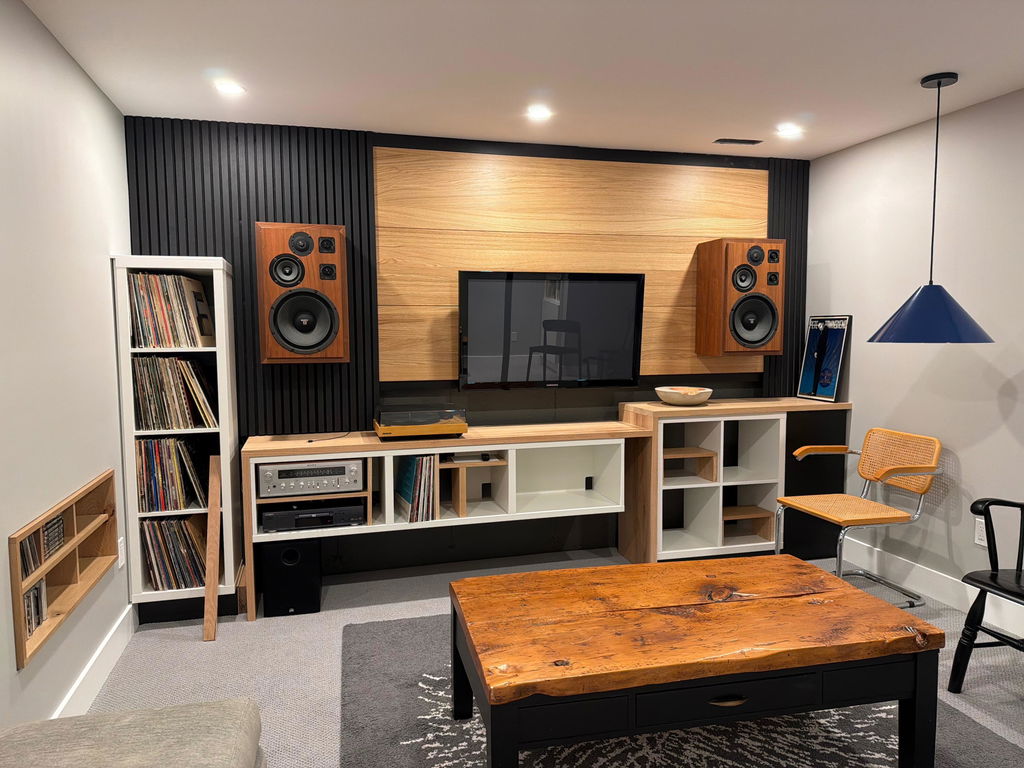
For example, a natural wood finish can work nicely with neutral walls and earthy materials. A darker divider can suit interiors with black metal details, modern furniture, or deeper accent colors.
You can also use wood slat panels elsewhere in the room to repeat the same visual detail. This is a simple way to create a more coordinated interior without making every surface look exactly the same.
If you want more variety, consider placing fluted panels or tongue and groove panels on another wall. Different profiles can work together when they share a similar finish or colour.
Where Should You Install a Wood Slat Room Divider?
Start with movement...
Look at the paths people naturally take through the room and make sure the divider doesn't interfere with doors, walkways, windows, or frequently used furniture.
Natural light deserves some attention as well. If you're placing the divider near a window, consider how the height and slat spacing will affect the light reaching the rest of the room.
Most importantly, decide what you want the divider to do. Maybe you need a home office, a clearer entryway, some bedroom privacy, or better organization in an open-plan space.
Once you know the purpose, finding the right location becomes much easier.
Conclusion
Wood slat room dividers can be a smart way to give open spaces more structure while keeping the overall layout feeling connected. You can use them to separate living and dining areas, create a home office, add privacy around a bedroom, or organize a multipurpose room.
The surrounding walls can also play a big part in the final look...
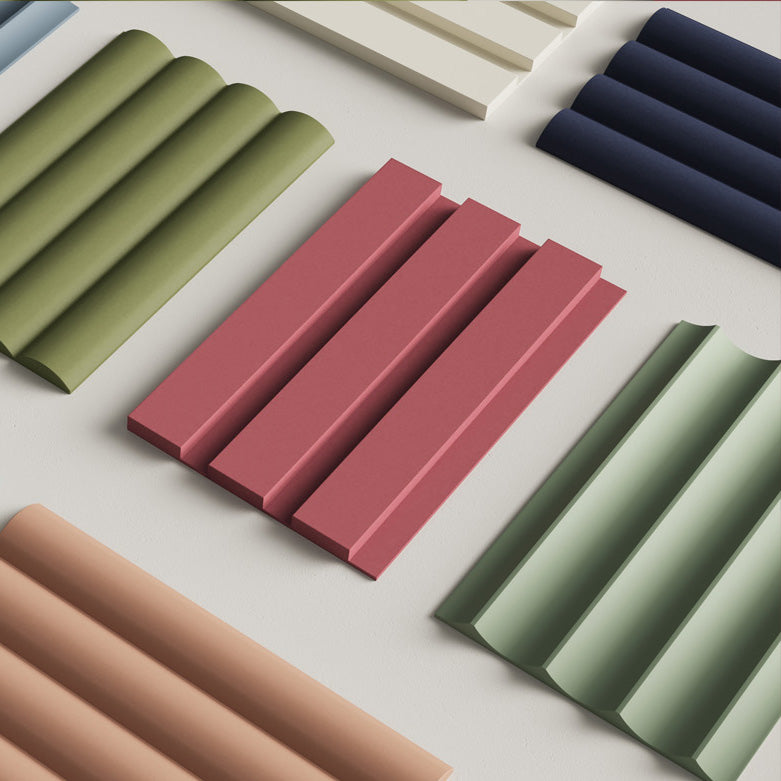
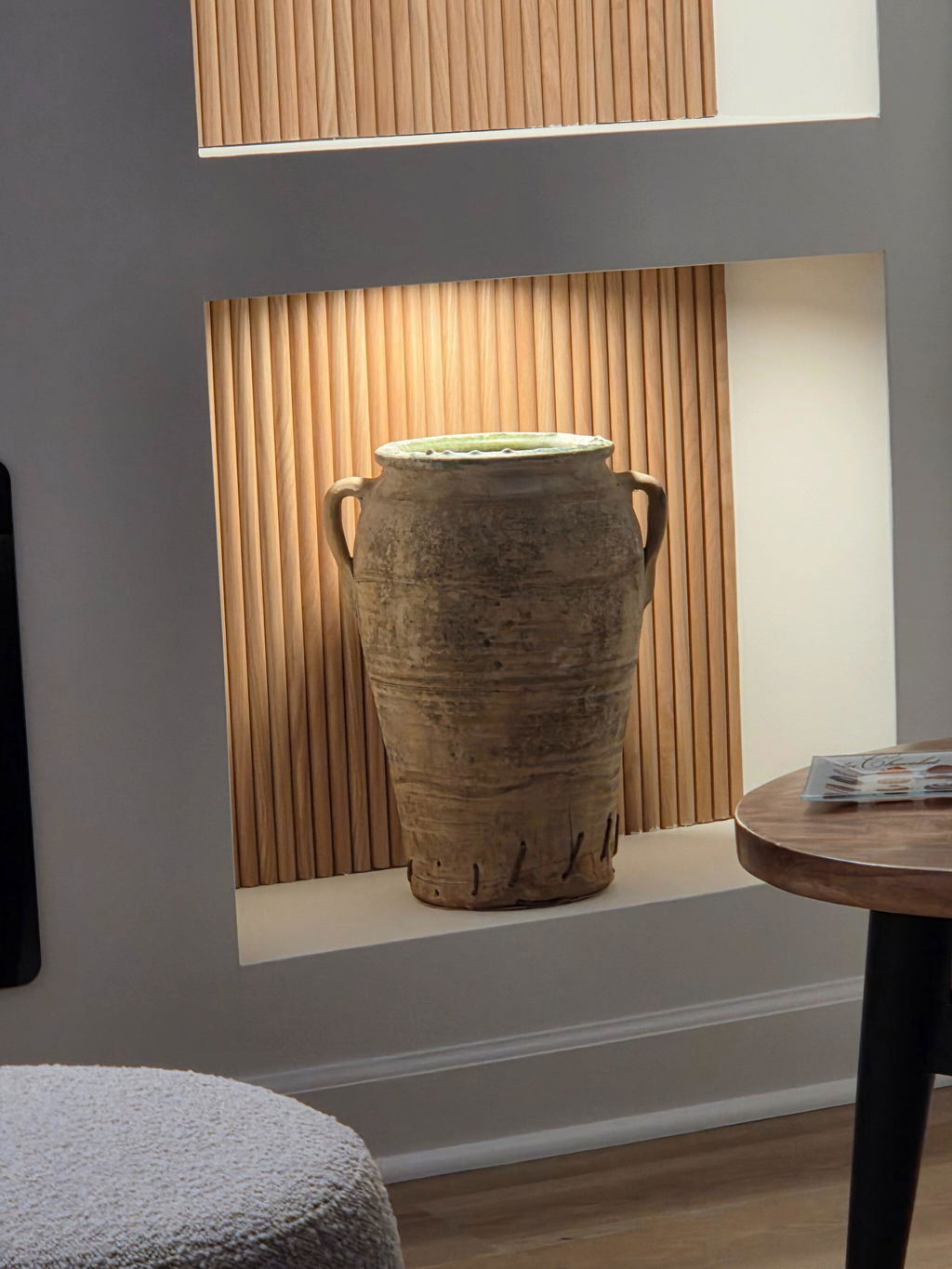
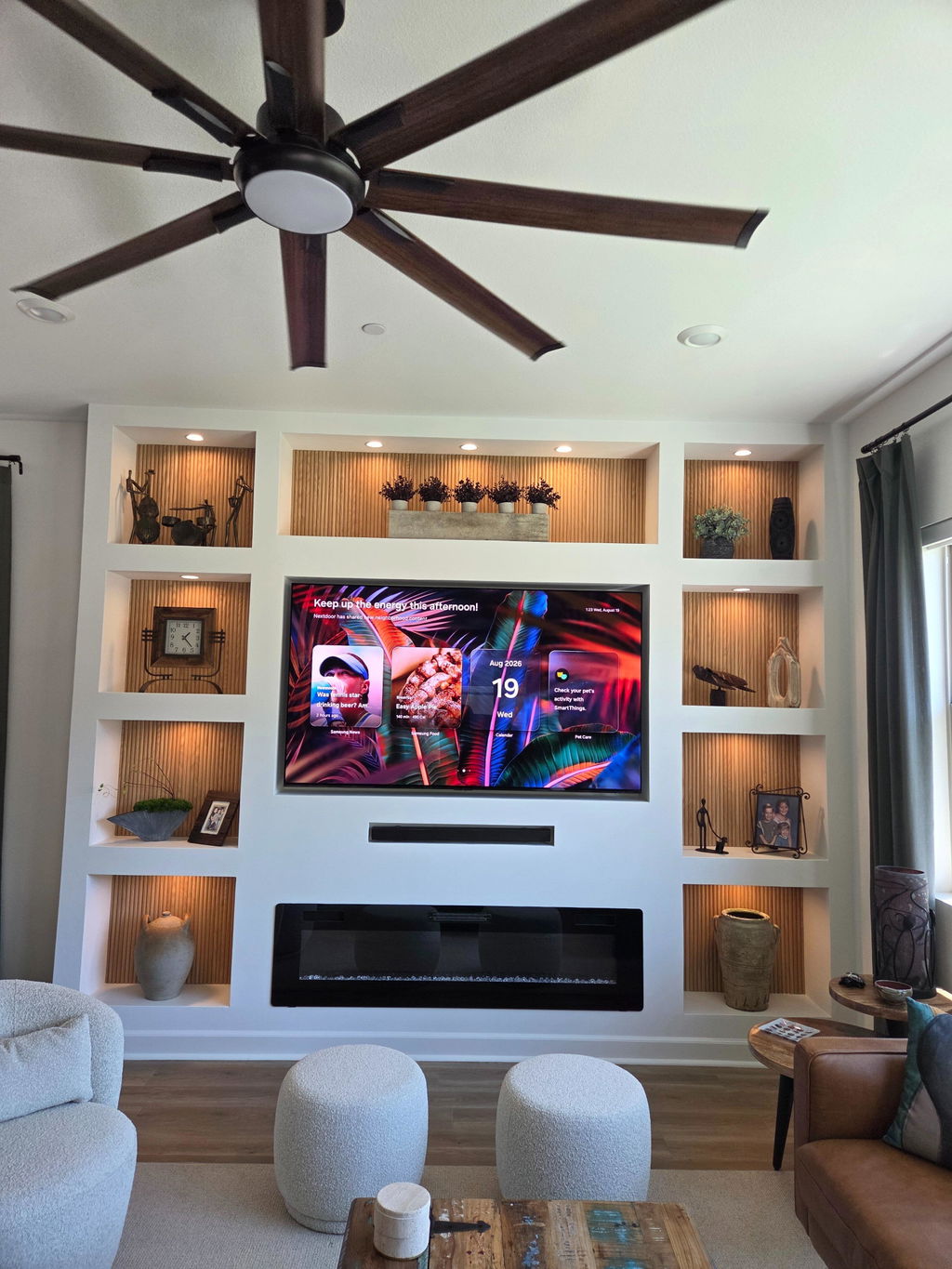
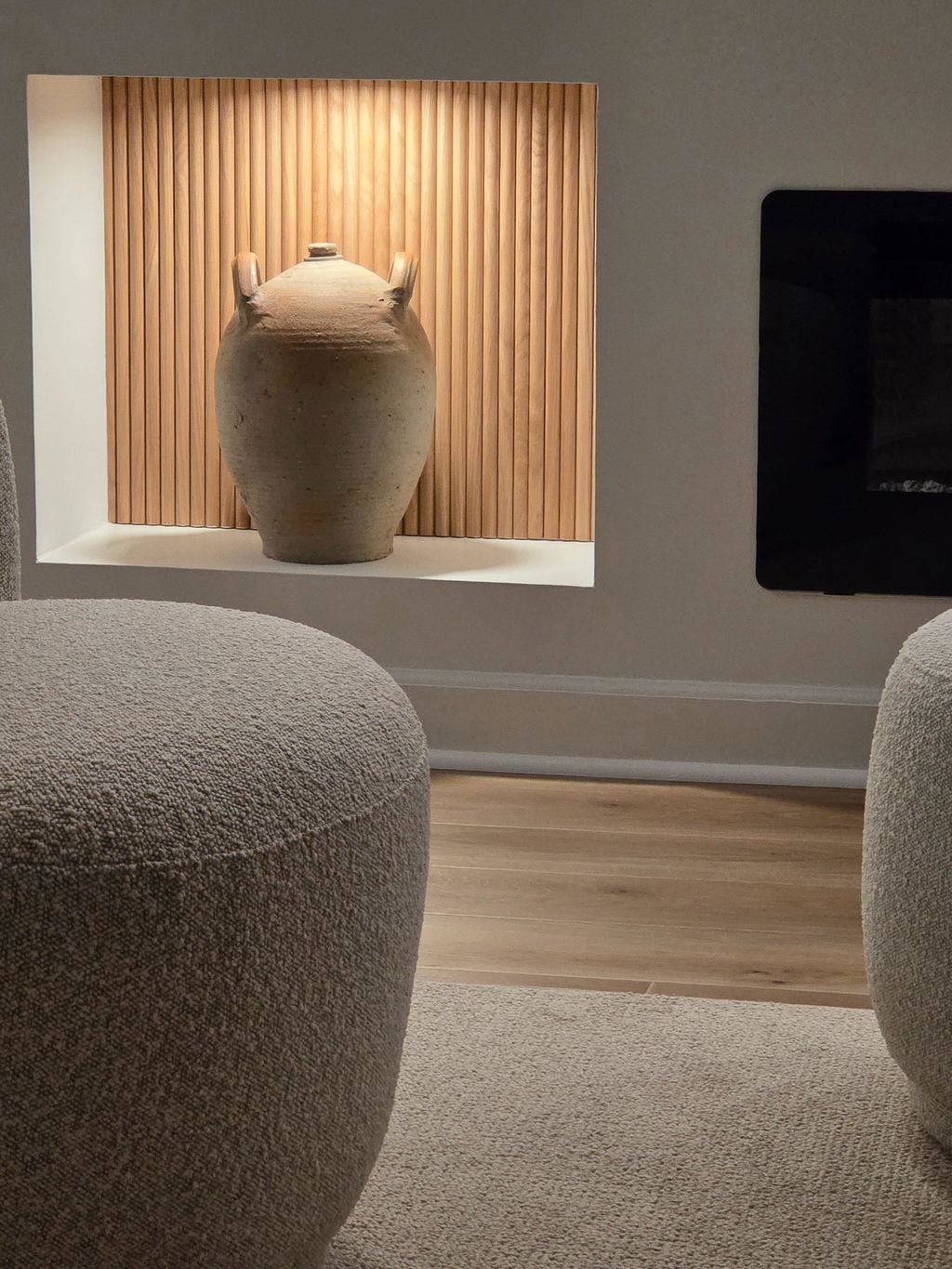
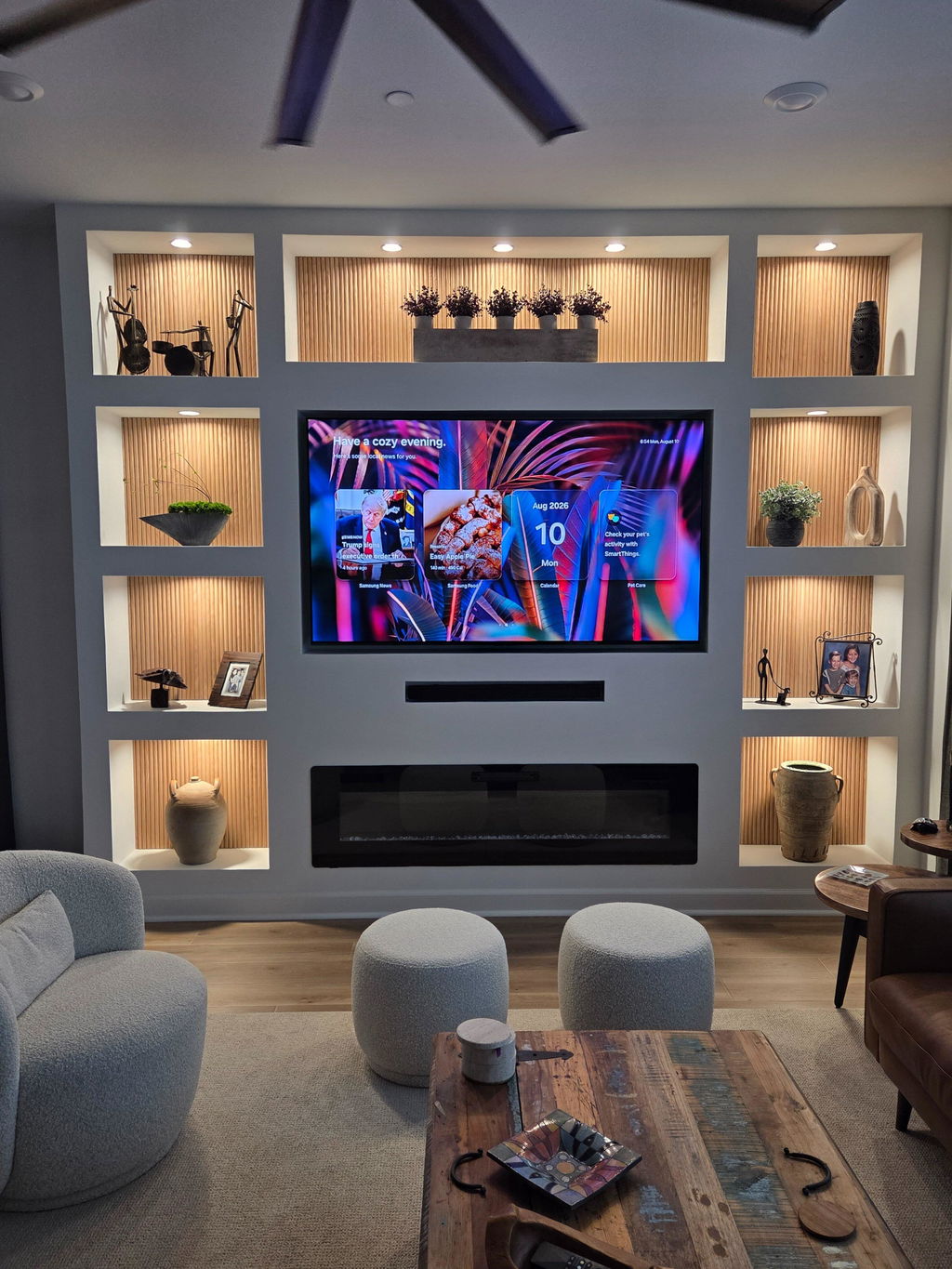
Wood slat panels, fluted panels, tongue and groove panels, and paintable panels each give you different ways to build around the divider and make the design feel more personal.
The details give you plenty of room to customize the look. Slat spacing, height, finish, and placement can all change how the divider works within your interior.
Take a look around your home and find an area that could use a little more definition. You might already have the perfect spot waiting for one!
Frequently Asked Questions
Are wood slat room dividers good for small spaces?
Yes. The open spaces between the slats allow light and visibility to pass through while giving different areas a clearer boundary.
Can wood slat room dividers provide privacy?
They can provide partial visual privacy. Closer slat spacing generally creates more separation around the area.
Where can I use wood slat room dividers?
They work well in living rooms, bedrooms, dining areas, entryways, home offices, kitchens, and multipurpose rooms.
Can I match wood slat room dividers with wall panels?
Yes. Using wood slat room dividers alongside coordinating wood slat, fluted, tongue and groove, or paintable panels can create a consistent look throughout your interior.
Are wood slat dividers suitable for modern interiors?
Yes. Their vertical design works well with contemporary furniture, neutral colors, natural materials, and many modern interior styles.



Leave a comment